What is a loss adjuster?
If you have made a sizeable water damage claim, your insurer may tell you a loss adjuster is coming. Here is who they are and what they will want to see.
A loss adjuster is a claims specialist appointed by your insurer to investigate a claim: what happened, what caused it, whether the policy covers it and what it should cost to put right. The Chartered Institute of Loss Adjusters describes them as impartial evaluators. When the insurer appoints them, the insurer pays them, not you. On a water damage claim, the first thing they need to know is where the water came from.
Who a loss adjuster works for, and who pays
Loss adjusters are usually independent firms, or specialist teams, that insurers bring in on larger or more complicated claims. The insurer sends them, and the insurer pays their fee. You do not pay for an adjuster your insurer appoints.
Their job is to establish the facts of the claim and recommend a settlement to the insurer. The professional body is the Chartered Institute of Loss Adjusters (CILA), whose chartered members use the letters ACILA or FCILA. The title has been in use since 1941.
A loss adjuster is a different job from a loss assessor, who works for the policyholder. The names cause endless confusion.
When a loss adjuster gets involved
Not every claim gets one. Small, straightforward claims are often handled over the phone or with photos. An adjuster is more likely when:
- the damage is extensive, across several rooms or floors
- the cause is unclear, or the leak is hidden
- drying, strip-out or alternative accommodation may be needed
- there is a question about whether the damage happened suddenly or built up over time
What a loss adjuster checks on a water damage claim
- The cause. Where did the water come from, and is that an insured event? Escape of water from a pipe, tank or appliance usually is. Water coming in from outside, or poor maintenance, often is not.
- When it started. Many policies treat a sudden burst differently to a slow leak that went on for months. The Financial Ombudsman has upheld claims where the leak was hidden and the owner could not reasonably have known about it.
- The extent. Which rooms, materials and contents are affected, and how wet they are.
- The cost. What it should take to dry out, repair and reinstate, and whether you need somewhere else to stay.
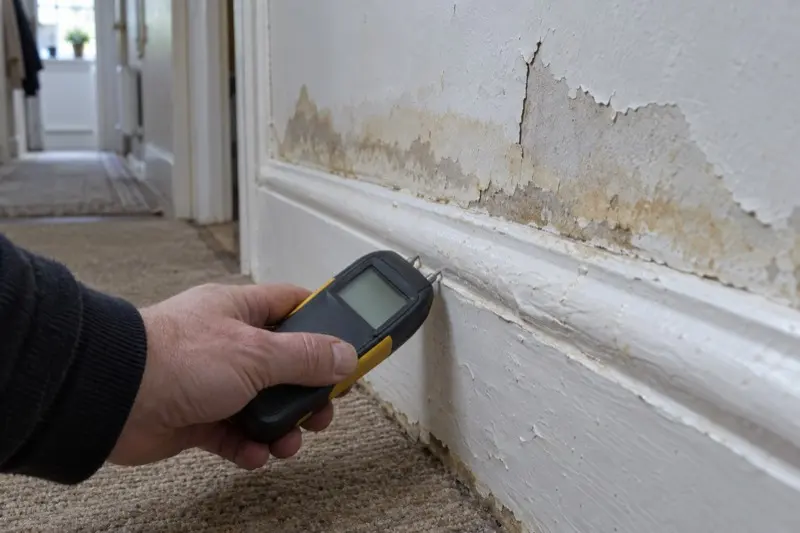
Every one of those depends on knowing the source. That is why a leak detection report, with photos, readings and the exact location, helps the adjuster answer those questions.
How to prepare for a loss adjuster visit
- Have your policy number and claim reference to hand.
- Keep your photos and video from when you first found the damage, and the water meter reading if you took it.
- Do not throw away damaged items without agreeing it first. If you must, photograph them.
- If the leak has been found, have the leak detection report ready, with the location, the cause and the evidence.
- Write down the timeline: when you first noticed something, when it got worse, what you did.
- Ask what happens next, who will contact you, and roughly when.
Hold off on permanent repairs until the adjuster or insurer agrees them. Emergency work to stop the water and make things safe is different: do that straight away and keep the receipts.
Where leak detection fits in the claim
Loss adjusters assess claims. They do not usually carry the thermal cameras, acoustic equipment and tracer gas needed to find a leak buried in a floor or wall. That work goes to a leak detection company, either one the insurer appoints or one you arrange with the insurer's agreement.
ADI Leak Detection lists insurers and loss adjusters among the people it works for. Its engineers provide what ADI calls insurance-approved trace and access reports, written by the engineer who attended, with photo and video evidence, and emailed within 48 hours of the investigation.
Common questions
Is a loss adjuster on my side?
They are appointed and paid by the insurer, and their job is to assess the claim fairly against the policy. CILA describes them as impartial. If you want someone to act only for you, that is a loss assessor, who you would normally pay yourself.
Can I disagree with the loss adjuster?
Yes. Put your points in writing to the insurer with any evidence you have, such as a leak detection report or a repair quote. If the insurer's final response does not resolve it, or you have not had one within eight weeks, you can take the complaint to the Financial Ombudsman Service.
Do I need a loss adjuster for a small leak?
You do not arrange one. The insurer decides whether to send an adjuster, usually on larger or more complicated claims.
Will the loss adjuster find my leak?
Usually not. Finding a hidden leak needs specialist equipment, so a leak detection company is brought in. The adjuster then uses that report to understand the cause.