Leak detection case studies
-
 Hot water
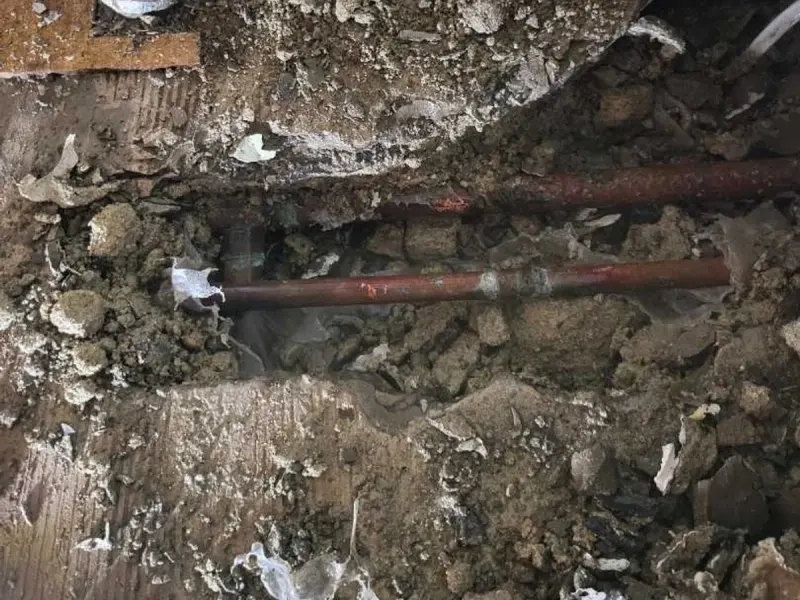
Hot water pipe leaking under a kitchen screed
Poplar, London, engineer Mark Pavitt
Methods: Acoustic listening, thermal imaging, damp meter, pressure testing
What the owner noticed
Water damage spreading across a kitchen and the bathroom next to it, and a mains supply to the combi boiler that kept running with no hot water in use.
What ADI found
Thermal imaging showed an irregular warm area under the sink and behind the dishwasher. Beneath the damp proof membrane was pooled water and a 15mm copper hot supply pipe with a hole in its underside.
Outcome
The section was renewed and held a one-hour pressure test at 4.0 bar with no drop.
For the claim: The investigation was covered under the buildings policy's trace and access clause. The customer was advised to send the engineer's report to the insurer to arrange drying and reinstatement.
Read the full job on ADI's site -
 Water mains
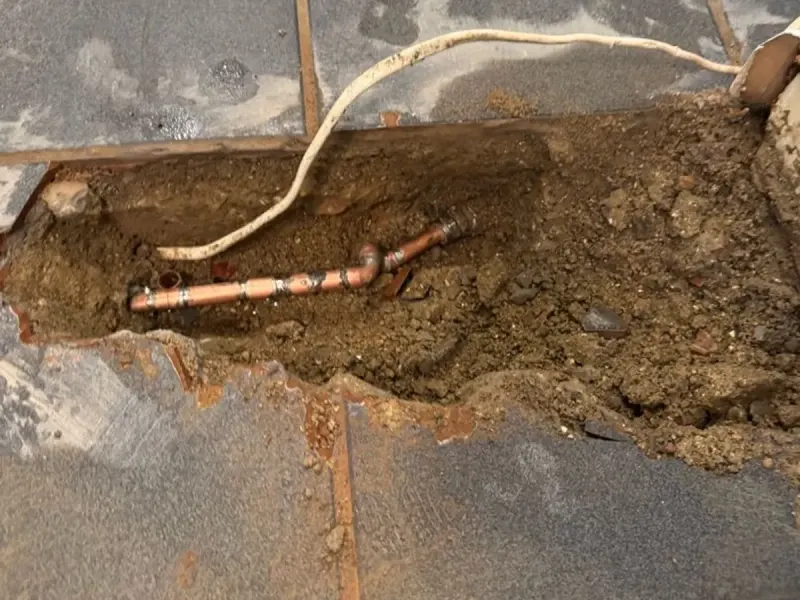
A leak the water company could not find
Bourne End, Buckinghamshire, engineer James Hunter
Methods: Tracer gas, acoustic listening, thermal imaging, pressure testing
What the owner noticed
The water company had already visited and replaced the external main, but the problem carried on. Running water could be heard on walking into the house with nothing in use.
What ADI found
Two separate leaks beneath the kitchen floor, including a failed compression joint buried under the tiles.
Outcome
Both were repaired in soldered 15mm copper.
For the claim: The recommended next steps were to file the documentation with the insurer for the damage and repair, and to claim a leak allowance from the water company.
Read the full job on ADI's site -
 Central heating
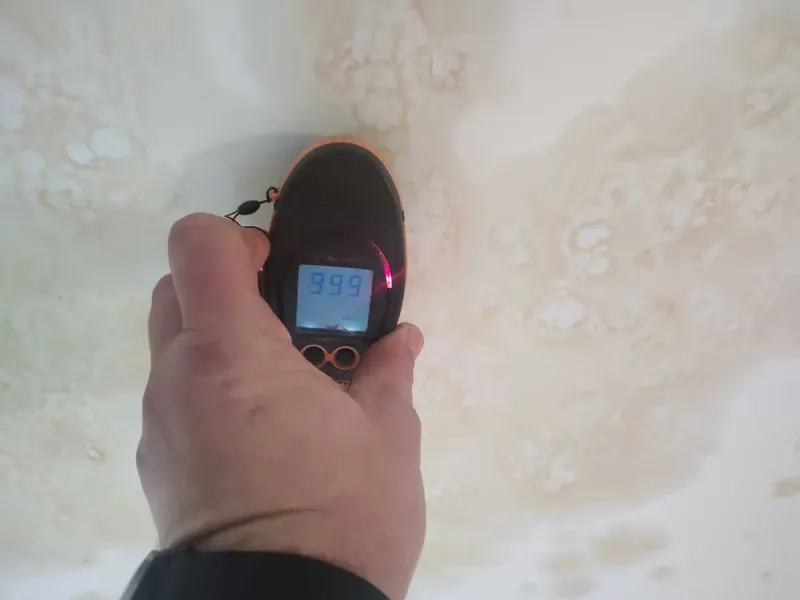
Damp living room ceiling, nails through a heating pipe
Bedford, Bedfordshire, engineer Gabor Weber
Methods: Thermal imaging, pressure testing, acoustic listening, endoscope camera, damp meter
What the owner noticed
The living room ceiling had turned damp and discoloured, and the 14-radiator heating system had dropped to 0 bar.
What ADI found
Under the bedroom floor above, nails driven through the floorboards had pierced a copper heating pipe and made a pinhole leak.
Outcome
A new 15mm copper section was fitted, inhibitor added, and the system passed a one-hour test at 2 bar.
For the claim: A report was prepared for the insurance company, giving the customer a documented record of the cause, the location, how it was found and the repair.
Read the full job on ADI's site -
 Cold mains
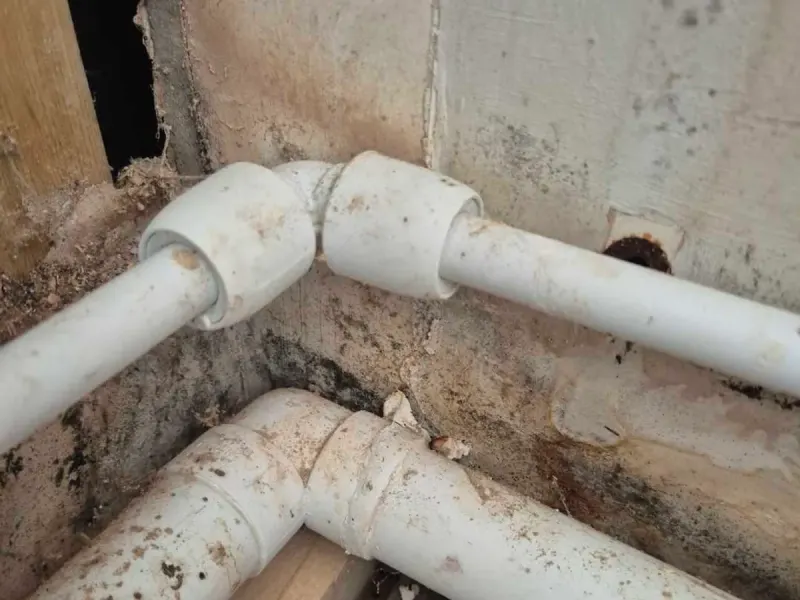
Garden room saturated by a failed fitting
Wandsworth, London, engineer Mark Pavitt
Methods: Damp meter, sectional isolation, pressure testing, tracer gas
What the owner noticed
A garden room and gym had severe water damage, with the walls and flooring saturated throughout, including its bathroom. Damp readings were at maximum across every wall and floor.
What ADI found
Separate pressure tests showed the hot supply holding and the mains dropping. Tracer gas escaped from boxing beside the WC, where a 15mm push-fit elbow had failed.
Outcome
The elbow was replaced and the mains held 4.0 bar for an hour. A separate damp patch at high level was flagged for its own investigation.
For the claim: The customer was advised the trace and access work fell under the buildings policy, and that the full report would be needed to support the claim.
Read the full job on ADI's site -
 Water mains
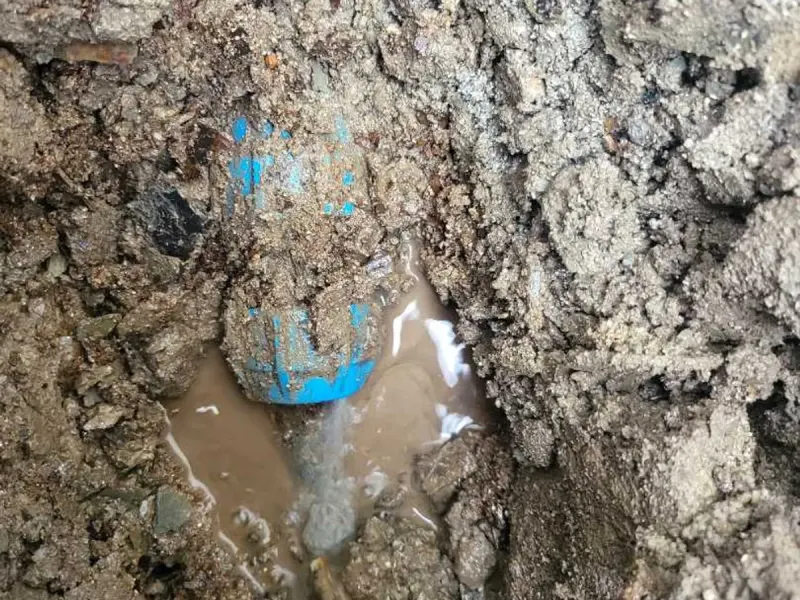
Old lead supply pipe failing under an outside wall
Plymouth, Devon, engineer Mark Pavitt
Methods: Acoustic correlation, tracer gas, damp meter, pressure testing
What the owner noticed
A leak on the incoming supply, on a lead pipe running under floor coverings, decking, concrete and brickwork between a WC and the outside wall.
What ADI found
A failed three-quarter-inch lead supply pipe on the riser beneath the outside wall.
Outcome
The riser was re-piped in 20mm blue plastic supply pipe and held a one-hour tracer gas test at 4.0 bar.
For the claim: The page states the work was covered under the trace and access clause of the buildings policy, so the investigation and repair costs should be met through the claim.
Read the full job on ADI's site -
 Cold mains
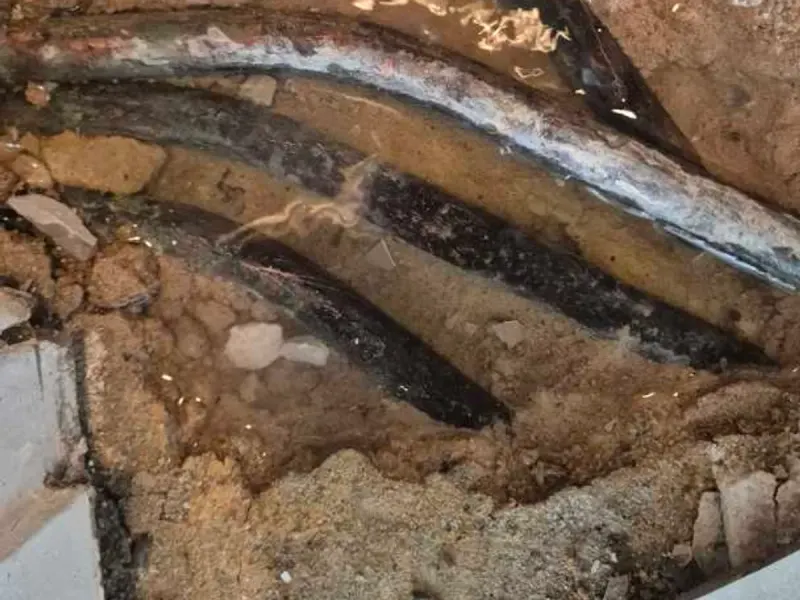
Water rising up through a cloakroom floor
Lewes, East Sussex, engineer Mark Pavitt
Methods: Damp meter, acoustic correlation, thermal imaging, pressure testing
What the owner noticed
Water rising through the tiled floor of a downstairs WC whenever the mains was turned back on, with damage to walls, woodwork and flooring in the WC and hallway.
What ADI found
A failed section of 15mm copper mains pipe running under the heating pipework where the WC floor meets the hall.
For the claim: The customer was left with a clear, documented record of the cause and location to support an insurance claim.
Read the full job on ADI's site -
 Central heating
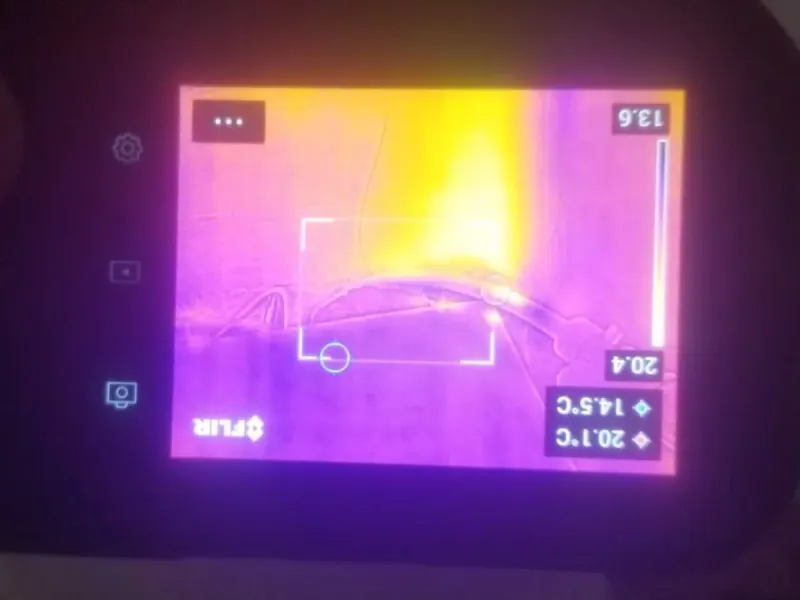
Two heating leaks under a concrete slab
Alton, Hampshire, engineer Robert Gires
Methods: Thermal imaging, damp meter, tracer gas, acoustic correlation
What the owner noticed
A large house with an oil boiler, 20 radiators and underfloor heating, where the ground floor pipes run beneath a concrete slab. Damp readings were very high on the kitchen wall behind the fridge freezer and the same wall in the living room.
What ADI found
Leaks at two separate points. Tracer gas at 1.5 bar confirmed exactly where both were before any structural work began.
Outcome
Both failed sections were replaced. The engineer warned that the rest of the ground floor copper pipework needed replacing urgently.
Why it matters: Both leaks were confirmed from the surface before anyone broke into the slab.
Read the full job on ADI's site -
 Cold mains
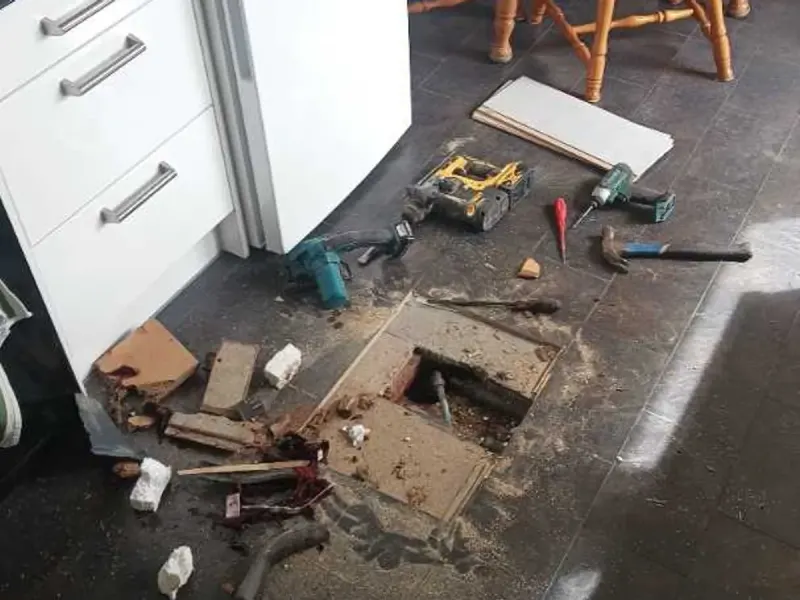
High water bills with no sign of a leak
Lowestoft, Suffolk, engineer Ferenc Gulyas
Methods: Pressure testing, tracer gas, acoustic correlation, endoscope camera
What the owner noticed
Unexpectedly high water bills with no change in use and no visible water damage anywhere in the house.
What ADI found
A leaking 25mm plastic supply connection under the kitchen floor, where the mains comes into the house through a duct under the kitchen extension.
Outcome
Repaired on the same visit. A retest showed no remaining leak, holding at 50 psi.
Why it matters: With no damage showing anywhere, the bill was the only clue. Pressure testing and tracer gas found it anyway.
Read the full job on ADI's site -
 Water mains
15 litres a minute lost at the boundary
Cockermouth, Cumbria, engineer Paul Hope
Methods: Acoustic listening, tracer gas, pressure testing
What the owner noticed
The meter showed about 15 litres a minute flowing continuously with every stopcock inside the house closed.
What ADI found
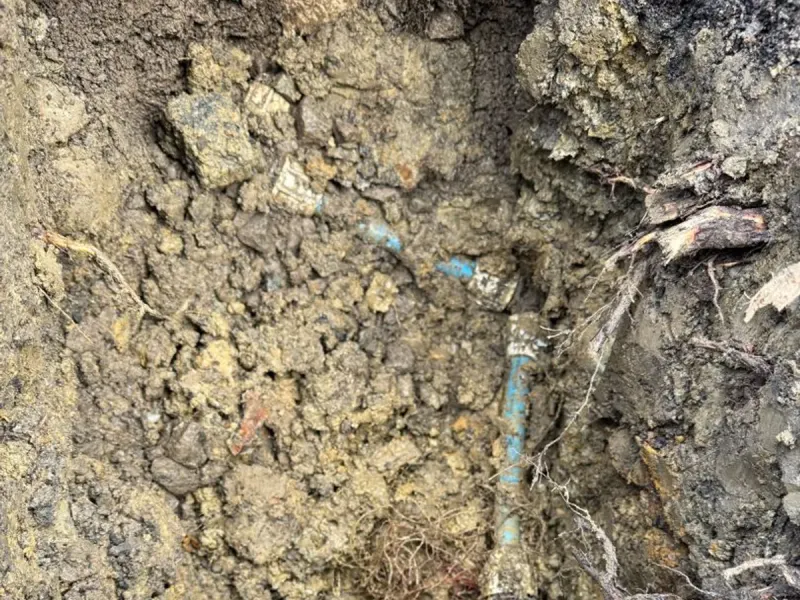
Acoustic methods gave no usable signal, so tracer gas was used. It located a failed coupling at the pavement boundary.
Outcome
Repaired and tested for 45 minutes at 4 bar.
For the claim: The customer was advised to check their buildings insurance for trace and access cover.
Read the full job on ADI's site -
 Buried pipework
Salts through the screed, a collapsed driveway
Burnham-on-Crouch, Essex, engineer Mark Jones
Methods: Flow metering, pressure testing, thermal imaging, acoustic correlation, tracer gas
What the owner noticed
White salts pushing up through the concrete screed in the underfloor heating cupboard, and a section of block paving on the driveway had collapsed. The leak was measured at 80 to 150 litres an hour.
What ADI found
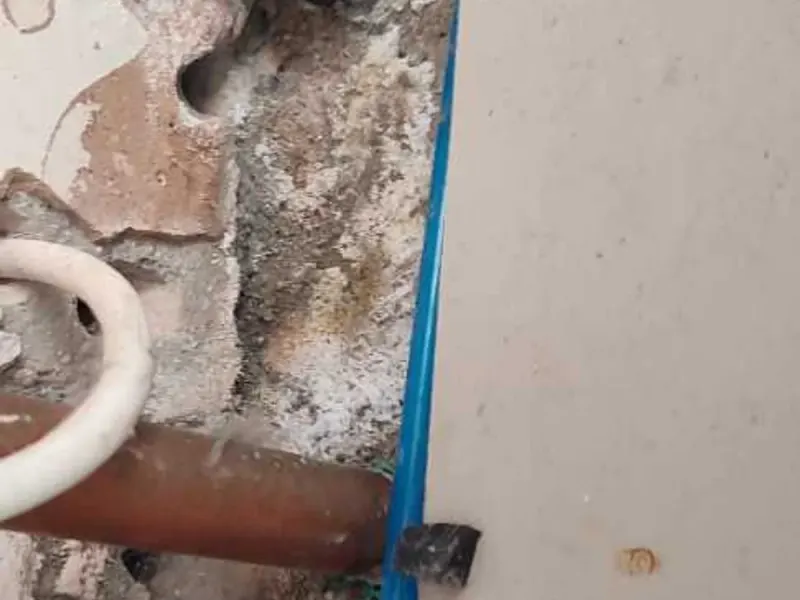
A damaged 15mm copper pipe under the kitchen floor at the doorway to the back hall, on the water softener bypass supply.
Outcome
The pipe was replaced, with advice to dry the floor as a priority.
Why it matters: Measuring the flow first showed how much water was escaping before the search began.
Read the full job on ADI's site
Summarised from case studies published by ADI Leak Detection at adileakdetection.co.uk, where ADI has written up more than 200 jobs.