Water damage claims and the loss adjuster, step by step
Escape of water claims follow a fairly predictable path. Knowing it in advance means you gather the right evidence and do not stall at the step most claims get stuck on.
Stop the water and record the damage. Report it to your insurer. Get the source of the leak found, ideally with a written report. On bigger claims a loss adjuster visits to confirm the cause, the cover and the cost. Then the leak is repaired, the building is dried, the damage is reinstated and the insurer settles, less your excess.
Day one of an escape of water claim
Turn off the stopcock, keep clear of wet electrics, and take photos and video of everything before you clear up. Then ring your insurer's claims line. Most policies expect you to report a claim as soon as you reasonably can, and late notice can cause problems. Full checklist: what to do when you find a leak.
Ask the insurer two things on that first call: whether you have trace and access cover, and whether they want to appoint the leak detection company or are happy for you to arrange one.
Finding the leak with trace and access
This is the step claims most often get stuck on. Until the source is found, the plumber cannot repair it, the drying company cannot start, and the loss adjuster cannot say what caused the damage or whether it is covered.
A leak detection engineer uses equipment such as thermal imaging, acoustic listening, tracer gas and pressure testing to locate the leak, marks the spot, and writes up the cause and location with photos and readings.
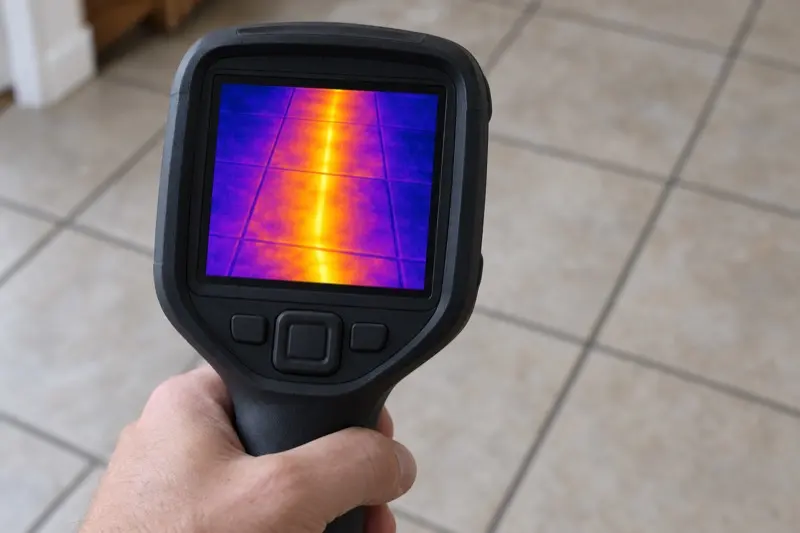
The claims industry's own escape of water guidance tells handlers to check whether trace and access cover applies and to document evidence before repairs and clean-up begin.
The loss adjuster visit
On a larger or complicated claim, the insurer appoints a loss adjuster. They inspect the damage, look at your evidence and the leak detection report, check the cause against the policy, and agree what work is needed. Have your photos, timeline and report ready.
If the leak has been running for a while, expect questions about when you first noticed it. The Financial Ombudsman has upheld claims where a leak was hidden, for example behind a bath panel or above a ceiling, and the owner could not reasonably have known about it.
Repair, drying and reinstatement
Once the cause and the scope are agreed, the leak is repaired, wet materials are dried out, and the damage is put right. Drying can take a while on screed floors and solid walls. The less that had to be broken out to find the leak, the less there is to dry and rebuild.
Most policies pay for the damage the water caused but not to repair the pipe, tank or appliance that failed. Many also exclude all damage from worn sealant or grout around baths and showers. Check the wording.
Claim settlement, and what to do if you disagree
The insurer pays for the covered work, less your excess, either directly to its contractors or to you. If you disagree with the decision, set out why in writing with your evidence. If the insurer's final response does not resolve it, or eight weeks pass without one, you can go to the Financial Ombudsman Service, which looks at professional reports and photos of the damage.
Common questions
How long does an escape of water claim take?
It depends on the size of the damage and how quickly the source is found. Drying alone can take weeks on solid floors. Getting the leak found early is the part you can control.
Should I get the leak found before the loss adjuster visits?
If the insurer agrees, yes. An adjuster who arrives to a located leak and a written report can move straight to the cause and scope. Ask your insurer before booking.
Will my insurer pay for ADI?
If your policy has trace and access cover, the cost of finding and reaching the leak is usually covered up to the policy limit, less your excess. ADI's own case studies include jobs where the investigation was covered under the buildings policy's trace and access clause.