
Loss adjuster leak detection for water damage claims
Insurers want to know where the water came from. ADI finds hidden leaks without wrecking your home.
The escape of water claim process, step by step
Most escape of water claims follow these six steps. The one that holds the rest up is step three. The claim process in detail.
-
1
Stop the water
Turn off the stopcock, keep clear of wet electrics, take photos.
-
2
Tell your insurer
Get a claim reference and ask about trace and access cover.
-
3
Find the source
ADI locates the leak and reports the cause, so the claim can move.
-
4
Adjuster assesses
On bigger claims, a loss adjuster checks the cause, cover and cost.
-
5
Repair and dry
The leak is fixed, the building dried and the damage put right.
-
6
Settlement
The insurer pays for the covered work, less your excess.
Insurer, loss adjuster and leak detection: who does what
Your insurer
The company that sold you the policy
- Logs the claim and gives you a reference
- Decides what the policy covers
- Appoints a loss adjuster on bigger claims
- Pays the settlement, less your excess
The loss adjuster
Appointed and paid by the insurer
- Inspects the damage and your evidence
- Works out the cause and whether it is covered
- Agrees the scope and cost of repairs
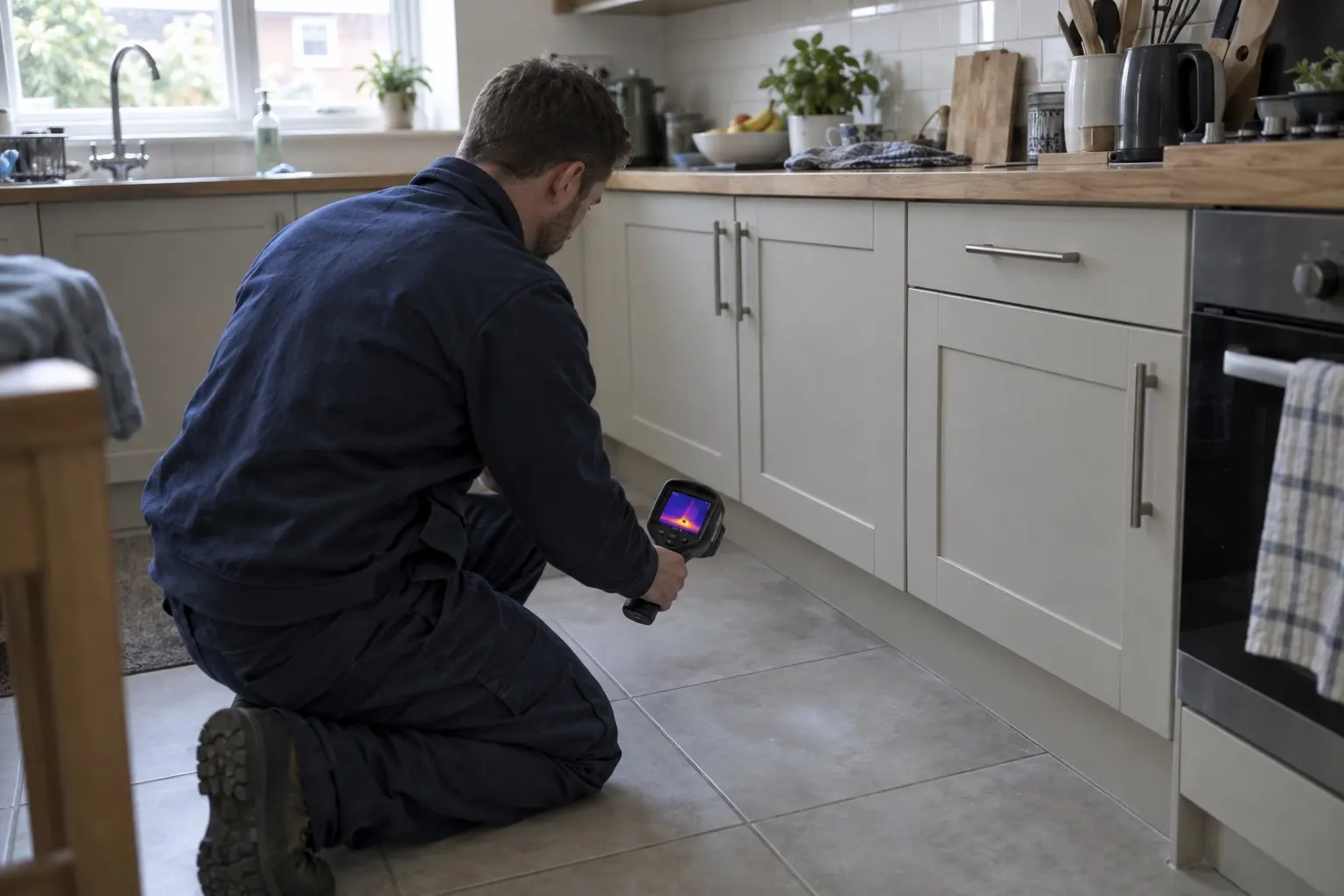
ADI Leak Detection
Finds the leak the rest of the claim depends on
- Traces hidden leaks with thermal imaging, acoustic listening and tracer gas
- Marks the exact spot, so only a small area is opened
- Reports the cause with photos and readings
- Aims to find and repair the leak on the same day
Signs of a hidden water leak
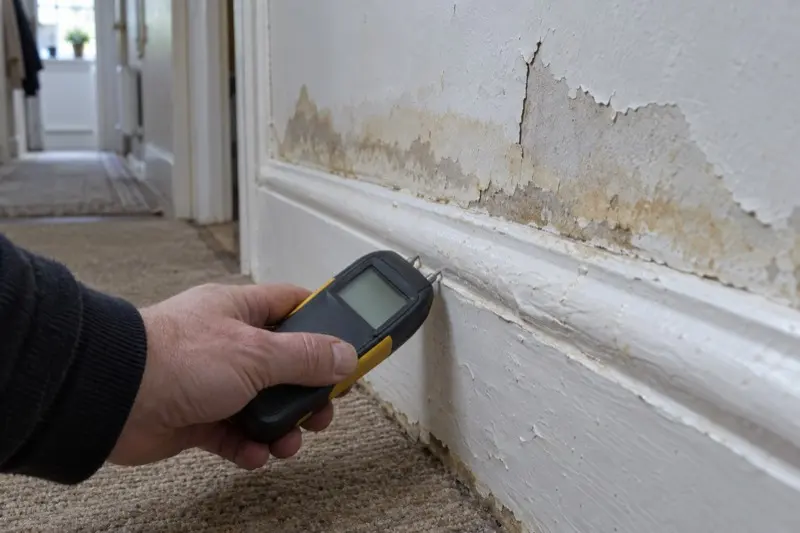
Damp that keeps spreading
Swollen skirting, tide marks on the wall, a stain that is bigger tomorrow than today. All the signs.
A water bill that jumped
Often a leak on the underground supply pipe. Do the meter test.
A warm patch on the floor
Usually a hot pipe leaking into the screed. Leaks under floors.
Boiler losing pressure
Topping up every few days means water is going somewhere. Boiler guide.
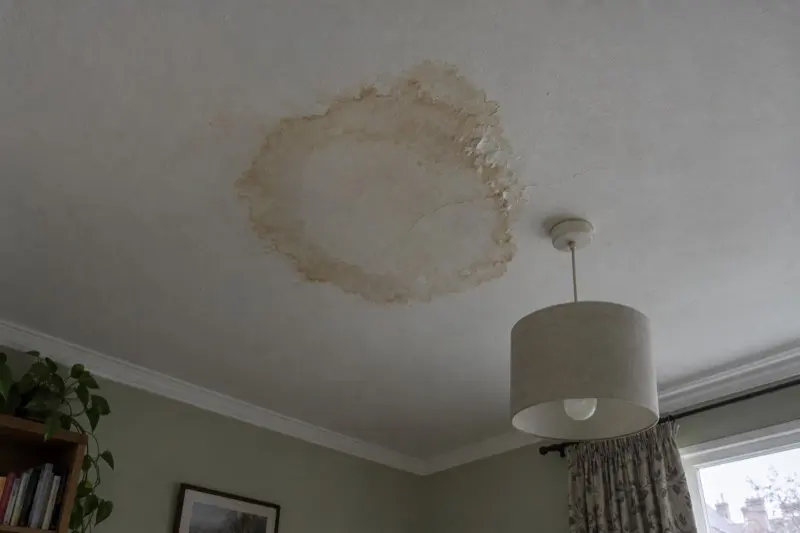
Water through the ceiling
A bathroom, pipe or tank above is leaking. Ceiling leaks.
A musty smell with no obvious source
Often the first sign of water inside a wall or under a floor, weeks before a stain shows.
How early leak detection saves money on a claim
Most of the cost of a leak is the damage, not the pipe. Aviva's average escape of water claim in 2025 was £8,595, and trace and access cover, where you have it, is typically capped at about £5,000.
Pinpointing the leak first means less floor to break out, less to dry and less of that limit used up before the leak is even reached.
Sources: Aviva, July 2026; Which?, October 2024.
Leak detection case studies
-
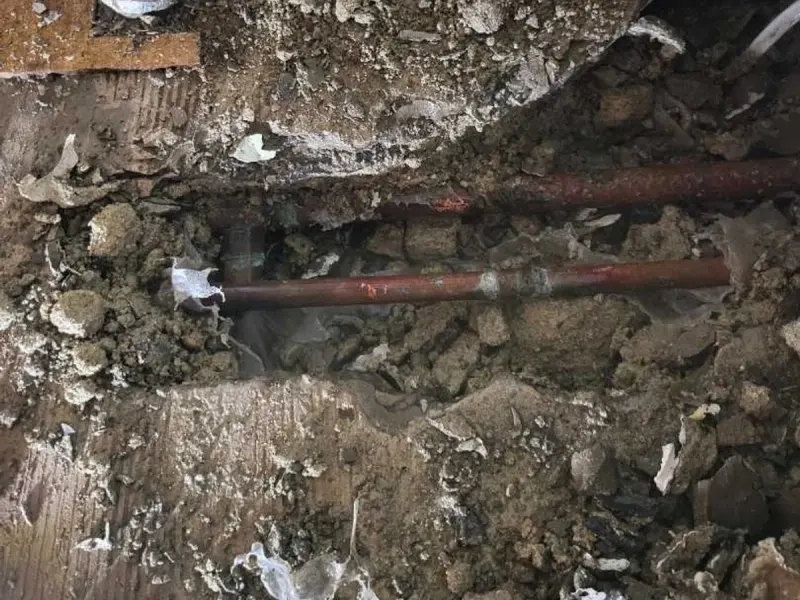 Hot water
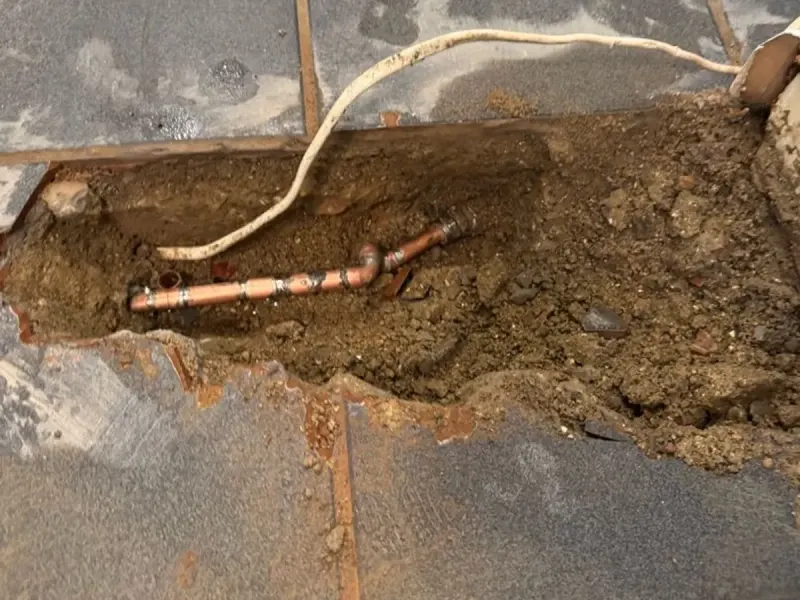
Hot water pipe leaking under a kitchen screed
Poplar, London, engineer Mark Pavitt
What the owner noticed
Water damage spreading across a kitchen and the bathroom next to it, and a mains supply to the combi boiler that kept running with no hot water in use.
What ADI found
Thermal imaging showed an irregular warm area under the sink and behind the dishwasher. Beneath the damp proof membrane was pooled water and a 15mm copper hot supply pipe with a hole in its underside.
Outcome
The section was renewed and held a one-hour pressure test at 4.0 bar with no drop.
For the claim: The investigation was covered under the buildings policy's trace and access clause. The customer was advised to send the engineer's report to the insurer to arrange drying and reinstatement.
Read the full job on ADI's site -
 Water mains
A leak the water company could not find
Bourne End, Buckinghamshire, engineer James Hunter
What the owner noticed
The water company had already visited and replaced the external main, but the problem carried on. Running water could be heard on walking into the house with nothing in use.
For the claim: The recommended next steps were to file the documentation with the insurer for the damage and repair, and to claim a leak allowance from the water company.
Read the full job on ADI's site -
 Central heating
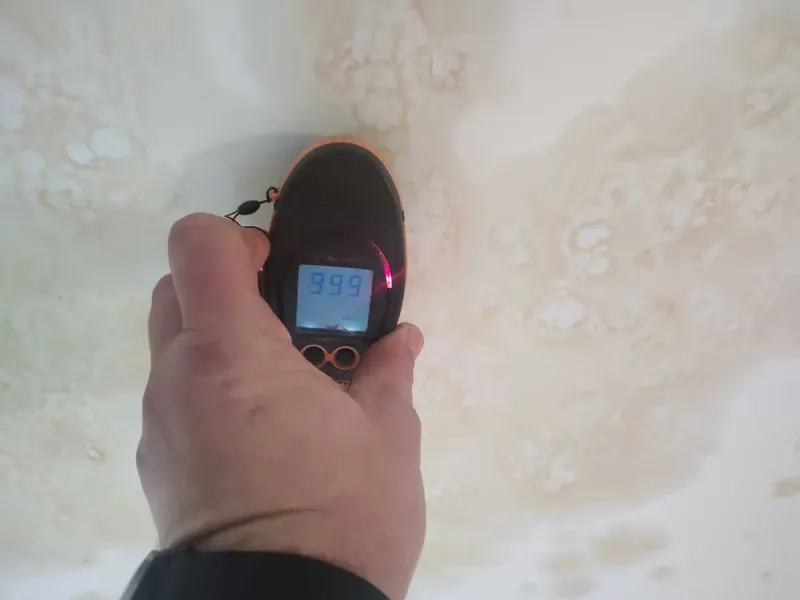
Damp living room ceiling, nails through a heating pipe
Bedford, Bedfordshire, engineer Gabor Weber
What the owner noticed
The living room ceiling had turned damp and discoloured, and the 14-radiator heating system had dropped to 0 bar.
For the claim: A report was prepared for the insurance company, giving the customer a documented record of the cause, the location, how it was found and the repair.
Read the full job on ADI's site
Guides to loss adjusters and water damage claims
-
What is a loss adjuster?
Who they work for, what they check, and how to prepare for the visit.
-
Trace and access cover
The part of your policy that can pay for the leak to be found and reached.
-
Loss adjuster or loss assessor?
Two very different jobs with very similar names, and who pays each one.
-
What to do when you find a leak
The first hour: stop the water, make it safe, record the damage.
Loss adjuster and leak detection questions
Who pays for leak detection on an insurance claim?
If your home insurance includes trace and access cover, the insurer usually pays to find the leak and to open up the floor or wall to reach it, up to a limit set in the policy. Check the wording or ask the claims line. Trace and access cover explained.
Does the loss adjuster find the leak?
Usually not. A loss adjuster assesses the claim: what happened, what caused it, what is covered and what it will cost to put right. Finding a hidden leak needs specialist equipment, so a leak detection company is normally brought in, either by the insurer or by you.
Can I choose my own leak detection company?
Often, yes, but ask your insurer first. Some insurers have their own suppliers and some will reimburse a company you appoint. Getting their agreement before work starts avoids arguments about the bill later.
Will breaking up my floor be covered?
Reaching the leak is normally part of trace and access cover. The less that has to be broken out, the less there is to reinstate, which is why pinpointing the leak first matters.
Is this site run by a loss adjuster?
No. It is published by ADI Leak Detection, a leak detection company. ADI lists insurers and loss adjusters among the people it works for, which is why we explain how claims work, but we do not handle claims. About this site.