Water coming through the ceiling
A brown ring on the ceiling means water has been getting in for a while. A drip means it is getting in now.
Turn off the water, keep people out from under any sagging area, switch off the lighting circuit at the consumer unit if water is near a fitting and the consumer unit is dry and safe to reach (do not use the light switch), and catch the drips. The most common sources are a bathroom above (shower tray seals, waste pipes, toilet connections), a pipe joint in the ceiling void, a water tank in the loft, or the roof. Get the source found before anyone starts cutting holes.
Where the water usually comes from
- Bathroom above. Failed shower tray or bath seals, cracked grout, a leaking waste trap or a loose toilet connection. These often leak only when the shower is used, which makes them hard to catch.
- Pipework in the ceiling void. Hot and cold feeds and heating pipes run between the joists. A weeping compression joint can drip for months.
- Loft tanks and cylinders. Overflowing cold water tanks, corroded fittings or a failed ball valve.
- The roof. Slipped tiles, failed flashing or blocked gutters, usually worse after rain.
Whether the stain appears after showers, after rain, or all the time is the most useful clue you can give an engineer.
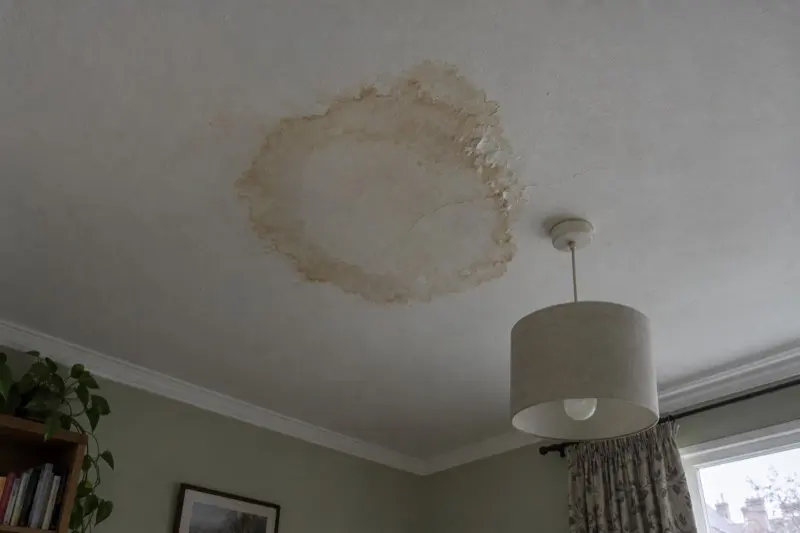
When a ceiling leak is dangerous
A bulging or sagging ceiling can come down without warning. Keep everyone out of the room below. Water near light fittings is an electrical risk: switch off the lighting circuit at the consumer unit if you can reach it safely.
What insurance tends to cover
Escape of water cover on buildings insurance typically pays for damage to the building caused by water from pipes, tanks, heating and appliances: the ceiling, plaster, decoration and fitted flooring. Carpets and belongings come under contents cover. Rain through the roof is not escape of water. Storm cover may apply, but damage from a worn roof is usually excluded.
Most policies do not pay to repair the pipe, tank or appliance that failed. Many also exclude all damage caused by failed or worn sealant and grout around baths and showers, so a leak from a tired shower seal may not be covered at all. Many policies also exclude damage from a leak that built up gradually, though the Financial Ombudsman may still expect the insurer to pay if the leak was hidden and you claimed as soon as you could have known about it. Wording varies, so read yours or ask the claims line.
On a larger claim, the insurer may send a loss adjuster. Their first question is usually what caused the leak, which is why a leak detection report matters.
Finding the source without wrecking the room
Water travels along joists and pipes before it drips, so the stain is often not under the leak. ADI's engineers use thermal imaging, moisture meters, borescope cameras and dye testing to trace it back, then report what they found with photos. Opening up one small section is cheaper and quicker to put right than cutting out a whole ceiling.
Common questions
Should I make a hole in a bulging ceiling to drain it?
It is sometimes done to stop a ceiling collapsing, but it carries risks of its own and a wet ceiling can be heavy. If you are unsure, keep the room clear and get professional help.
Is a leak from the flat above my problem?
If the leak starts in a neighbour's flat, their insurer or the building insurer may be involved. Report it to your own insurer and the managing agent, and get the source confirmed so everyone is working from the same facts.
More leak guides
-
Signs of a hidden leak
Damp patches, a meter that never stops, a boiler that keeps losing pressure, and the other clues that water is escaping somewhere you cannot see.
-
What to do when you find a leak
The first hour: stopping the water, keeping safe, the photos your insurer will want, and who to ring in which order.
-
High water bill? Check for a leak
How to test your meter in half an hour, who is responsible for which pipe, and why a leak on your supply pipe can cost you twice.
-
Boiler losing pressure
If you are topping the boiler up every few days, the water is going somewhere. How to tell a boiler fault from a hidden heating leak.